

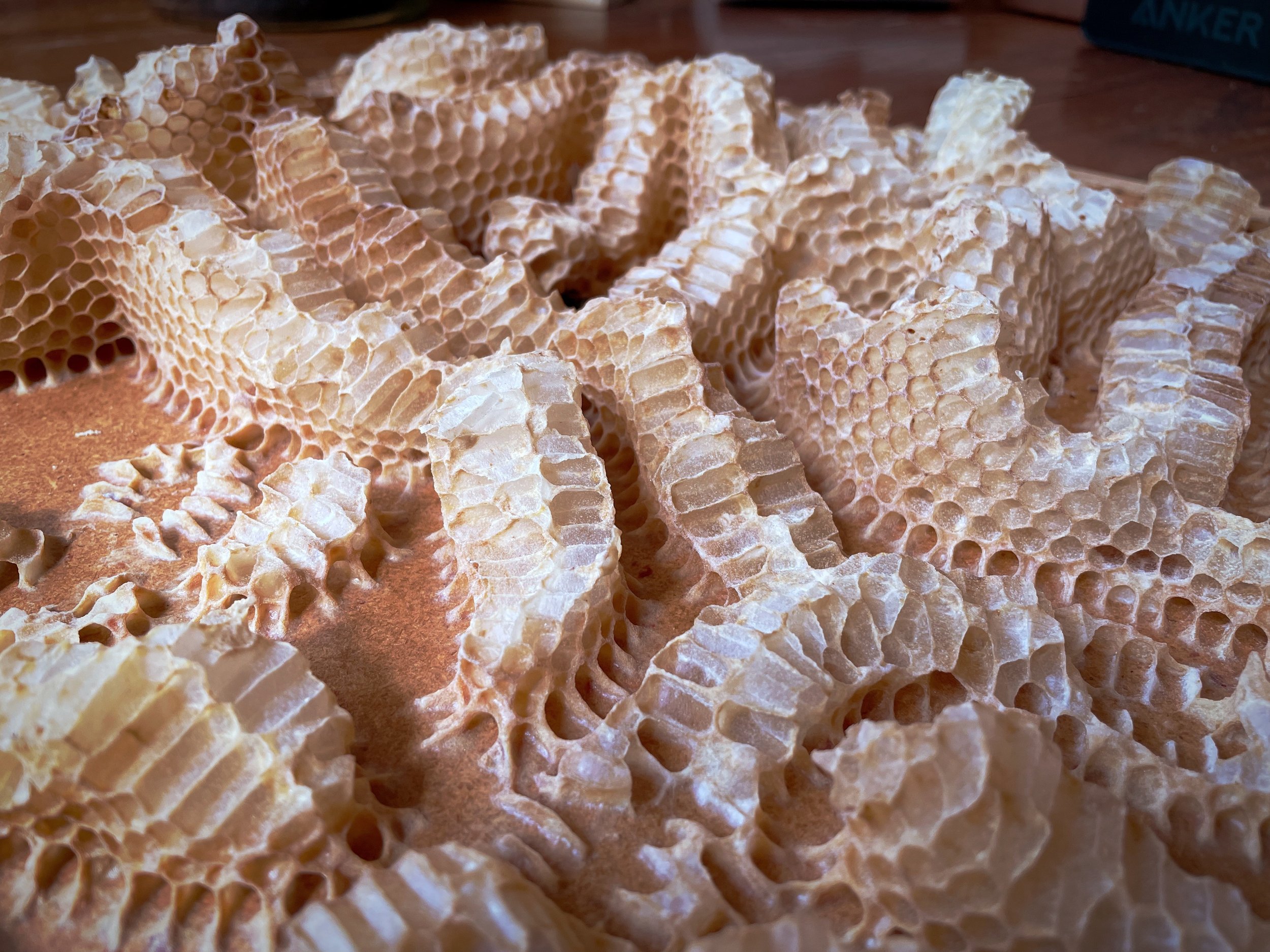
Promoting honey bee culture, native pollinators, and ecosystem awareness in Kansas City
Honey Bee Culture
Humans have been keeping honey bees for over 5,000 years, and before that they foraged wild honey from hives — likely for millions of years! One beautiful thing about keeping bees is how it connects you not just to nature but to human history as well; it gives you a connection to humans from ancient to modern day Asia, Africa, Europe and Latin/South America. How great is it to have a hands-on activity that can connect you to the ancient Egyptians?
Today honey bees pollinate most of our flowering plants and are responsible for one of every three bites of food we take. They live five weeks on average, so they are also a great food source for birds, insects, and even small mammals.
We keep bees in communities around the city; free honey is distributed and sold to support our partners, the bees help the green spaces of our city, and public events with the hives bring people together. Bees provide mutual benefit to the nature around them, and this can extend to us humans as well!
Native Pollinators
Our region is home to over 400 species of native bees who build homes in the ground, in wood, inside dead flower stalks, even in human-built shelters. Most natives are solitary, meaning they don’t have a permanent “home” and don’t live in colonies, and their travel range is much smaller than a honey bee’s.
On a bee-to-bee level native bees are actually more efficient at pollinating plants than honey bees, as they visit more than one type of flower at a time and do not retain as much pollen on their trips. One common criticism of keeping European honey bees is that some say they compete with local pollinators. We believe (and studies have shown) that they all can coexist: natives visit some flowers that honey bees haven’t evolved to eat from, and there has been some evidence that the presence of honey bees increases flowering plants to the extent that there is more food for all. We believe that the spare and sporadic distribution of food and nesting habitats are the real problem.
We need less grass and pavement, and not just more flowering perennials but semi-connected planted beds (think of little highways) that the natives can eat, nest, and expand along. For that reason we promote the creation and placement of habitats for local bees and others, and spread knowledge and awareness of these animals. One of our goals, inspired by the Pendleton Heights Orchard (a community-run garden & fruit orchard on a vacant lot), is to rewild pockets of the city only for native pollinators and birds: imagine little oases on every block for city wildlife!
Building Community
Beekeeping and its products have a truly remarkable network of connection to our community. Honey, pollen, propolis, and royal jelly can be used in food and drink in our homes, restaurants, breweries and more. Honey bees and native pollinators make most of the produce (and related foods) sold in the markets and grocery stores possible, and do the same work in all urban and community farms and gardens. From agriculture to architecture, medicine to mindfulness, bees touch nearly every part of our lives. They are also a key bio-indicator: if the honey bees and natives suffer, we can be sure we’re next. Beekeeping is a practice pursued by people of all ages and backgrounds, and it’s a wonderful touchstone to local and world history! We work to build community everywhere we can through workshops, volunteer opportunities, school visits, honey harvests, community garden support, dinners and more. And you don’t need to be part of an organization, anyone can keep bees and use that as an opportunity to meet and involve friends and neighbors. Bee culture has the potential to bring together so many people from so many areas of our city, and that is what Bee KC exists to do.